While no one can deny that Christopher Nolan’s Odyssey is a cinematic masterpiece, its costumes spark wide debate online, with backlash from history buffs over inaccuracies. However, the movie’s costume designer, Ellen Mirojnik, rightly states that Odyssey belongs not to a historical period but to a timeless one. Just like Nolan’s interpretation of the Greek epic, I believe the costumes had more to do with the character’s personal journey rather than what people might have worn in the Bronze Age.
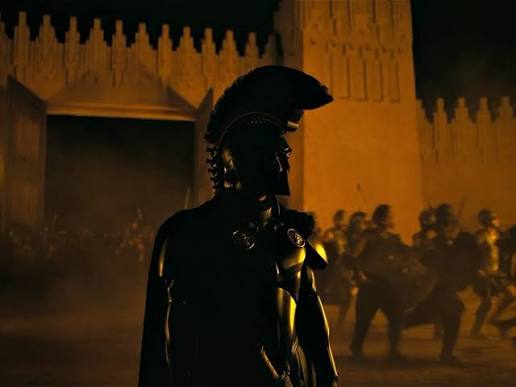
This is especially clear with Agamemnon’s only costume in the film: his shiny black armour and helmet. The armour looks almost like something from a race car, which makes it stand out. That’s intentional. Unlike the other characters, who are forced into war, Agamemnon chooses it. The armour becomes part of his identity throughout the movie, except when he is about to be killed. The tough, polished armour is in stark contrast with the vulnerable Agamemnon we see in the bathtub. Some viewers have compared the armour to the Dark Knight’s suit, but the real goal was to show the difference between the armour and the man inside it. The golden spine on his helmet shows Agamemnon’s spinelessness in dragging everyone into his war.

Penelope and Helen’s costumes bring a flash of colour to the otherwise sepia-washed costumes. The system gives Penelope almost no agency over her kingdom. But she makes sure to look her part as the ruler of Ithaca and hold her place in a fractured system that does not show her faith. The high bun, exquisite jewellery, and long jewel-toned gowns make her look towering in front of the sea of suitors. Another queen with shorter screen time but no less importance is Helen of Troy. Everyone who has read the epics must have wondered what would happen to Helen after the war. As Ellen Mirojnik describes, they wanted Helen to look otherworldly; the golden chainmail dress elevates her presence to a demigoddess. The chainmail, otherwise worn on the battlefield, reflects Helen’s presence in Menelaus’s kingdom. She is not loved, trusted, or respected in her own kingdom. For Helen, a war had just begun
Another woman whose costumes created a buzz is Calypso’s fishnet shrug. While it is functional, it is not aesthetically a better choice. Most of them look wrapped, cozy and warm. Calypso’s wrapping the linen tighter says beautifully about her impending loneliness without her mentioning it. That is what the costumes want to do: tell more about the characters than is said. She knows Odysseus will return; she knows an eternity of loneliness is for her.
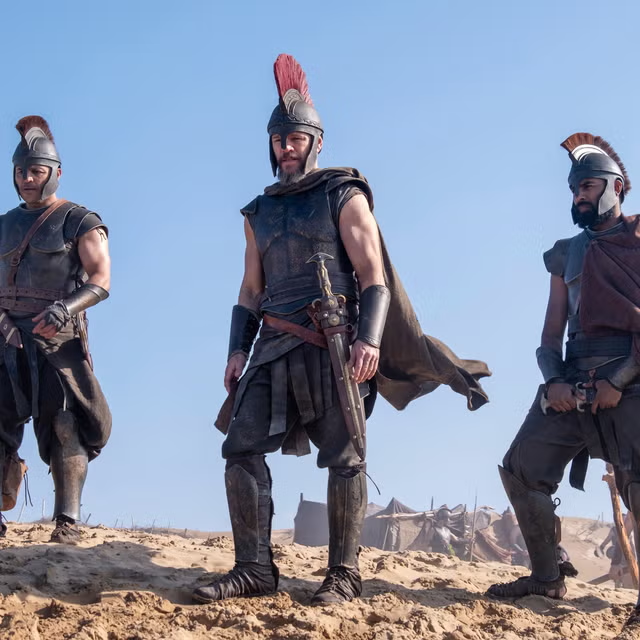
Lastly, the matte, worn-out armour for all the Trojan warriors was a better choice in terms of context. Odyssey is a post-war epic. Everyone who had an active part in the battle is dilapidated, weather-beaten, and homesick, including the goddess Athena. However, Telemachus’s silver armour costume feels rather out of place among the rest. A fellow content creator rightly points out that it looks too Disney. I personally feel the costume wants to show Telemachus’s coming of age, from a lost boy to a worthy Prince about to meet his father, but it should be a little dimmed to fit with so much armour and leather seen previously.
Trying to pinpoint a time in history might not do justice to the rather poetic ensemble of this timeless piece. They express and add to Odysseus’s exhaustion, Penelope’s regality, Helen’s internal conflict, and Agamemnon’s vanity. Costumes are both part of the frames they are in and characters that embody them. Nolan’s Odyssey does the same.
Leave a Reply