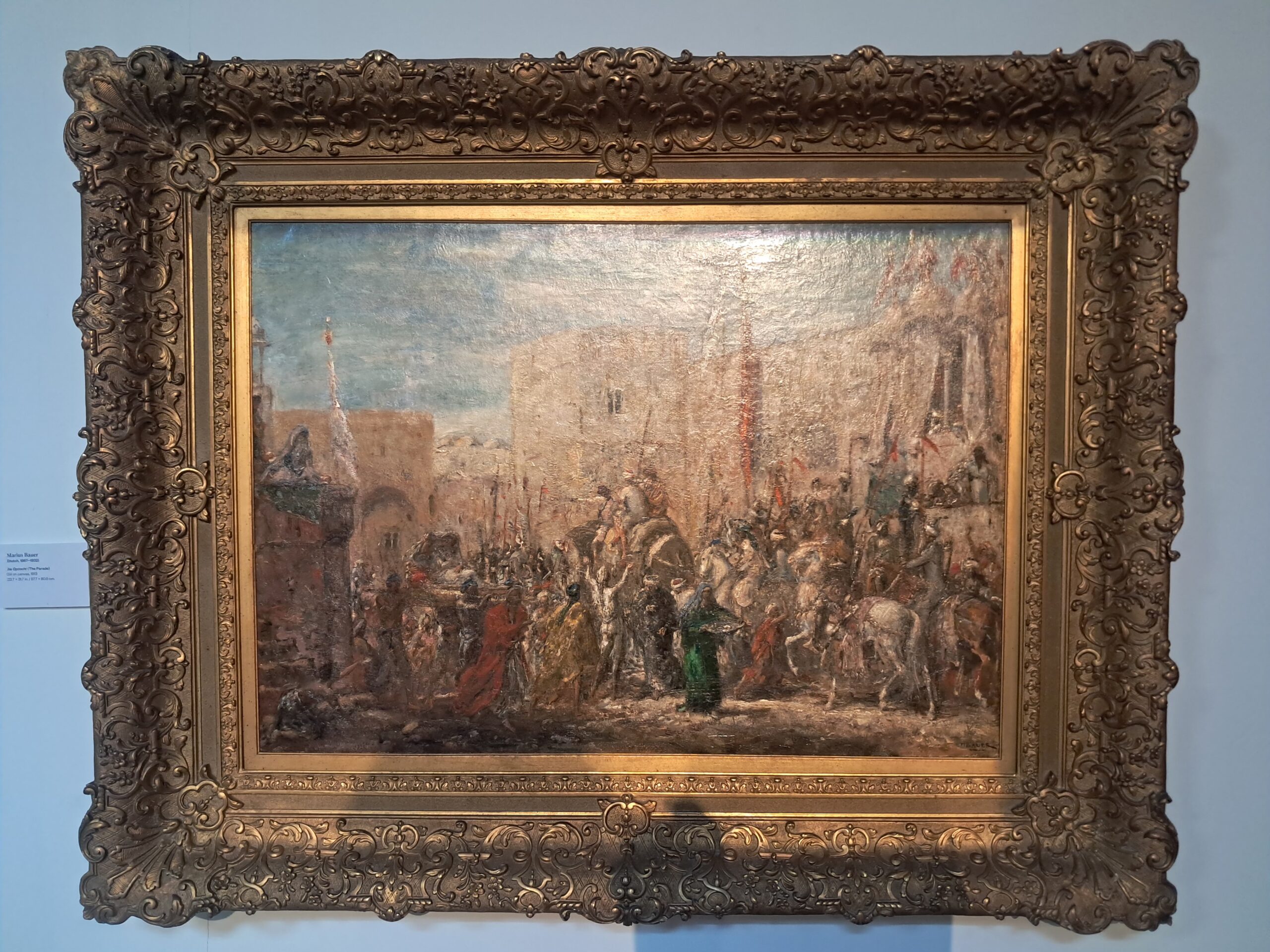
India has long existed as both a place and a projection in the Western imagination—first as a land of marvels in the accounts of the ancient Greeks, later refracted through the moral gaze of missionaries and the administrative eye of the colonizers. With each era, the image of India shifted from a land of unlimited treasures to a land of heathen practices. Yet by the late nineteenth and early twentieth centuries, a different artistic curiosity began to emerge. Moving beyond imperial spectacle and orientalist fantasy, several foreign painters turned their attention to the pulse of everyday life—its crowded bazaars, river ghats, winding streets, labouring bodies, and fleeting moments of ordinary existence. Destination India: Foreign Artists in India, 1857–1947, on view at the Alipore Jail Museum until 2 May 2026, traces this evolving gaze, revealing not only how outsiders saw India but how art sometimes moved closer to seeing it lived.
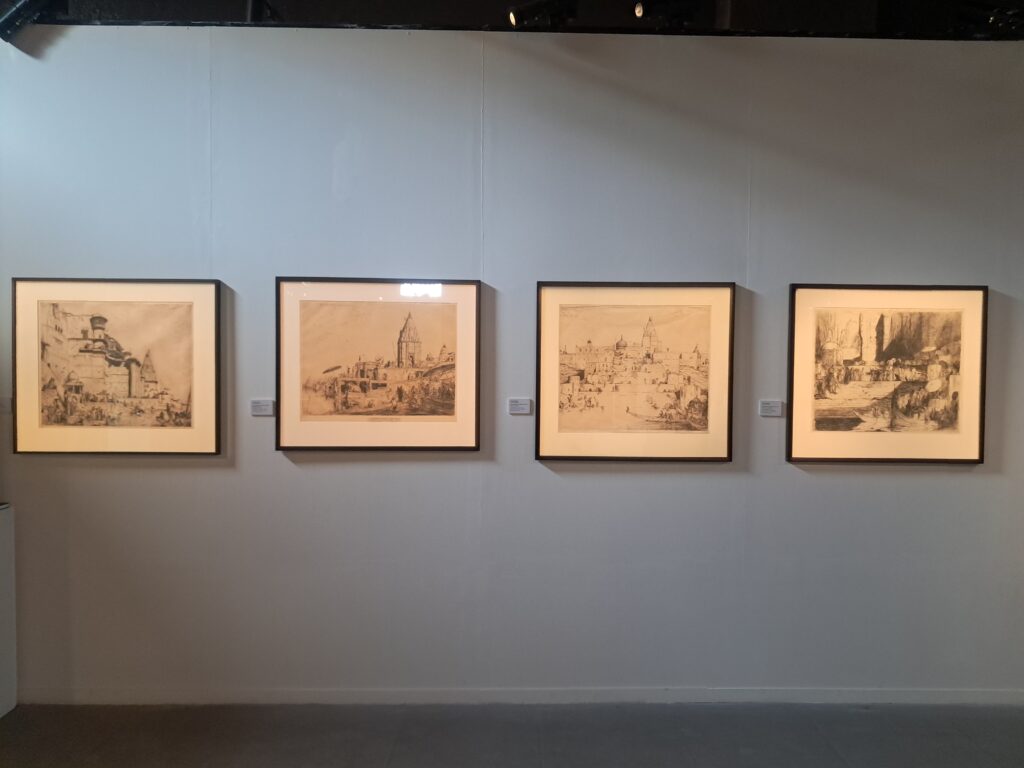
The exhibition opens with a series of Mauris Bauer’s etchings that evoke an audio quality. Through these works, Bauer intends to immerse viewers in the sensory richness of the Banaras ghats: regular bathers taking a dip, brahmins chanting, riverside children diving, boats ferrying passengers, hawkers calling, and visitors chatting; the daily life of Indians unfolding in and around the holy river of the Ganga towered by the majestic temples. Bauer not only depicts the sheer beauty of the subject but also very accurately captures the spiritual essence of this ancient city of Kashi.
From the serene ghats of Benaras, through the hustling-bustling lanes of Delhi, the exhibition takes you to lesser-known yet majestic places in Rajasthan, depicted through the eyes of European artists John Griffins, William Carpenter, and Hugo Velfred Pederson. For me, the exhibition takes a more enriching turn as the subjects shift from Eastern escapades to portraits of ordinary people and not-so-ordinary people by artists like Alfred Crowdy Lovelett, William Carpenter, and Hugo Vilfred Pederson.
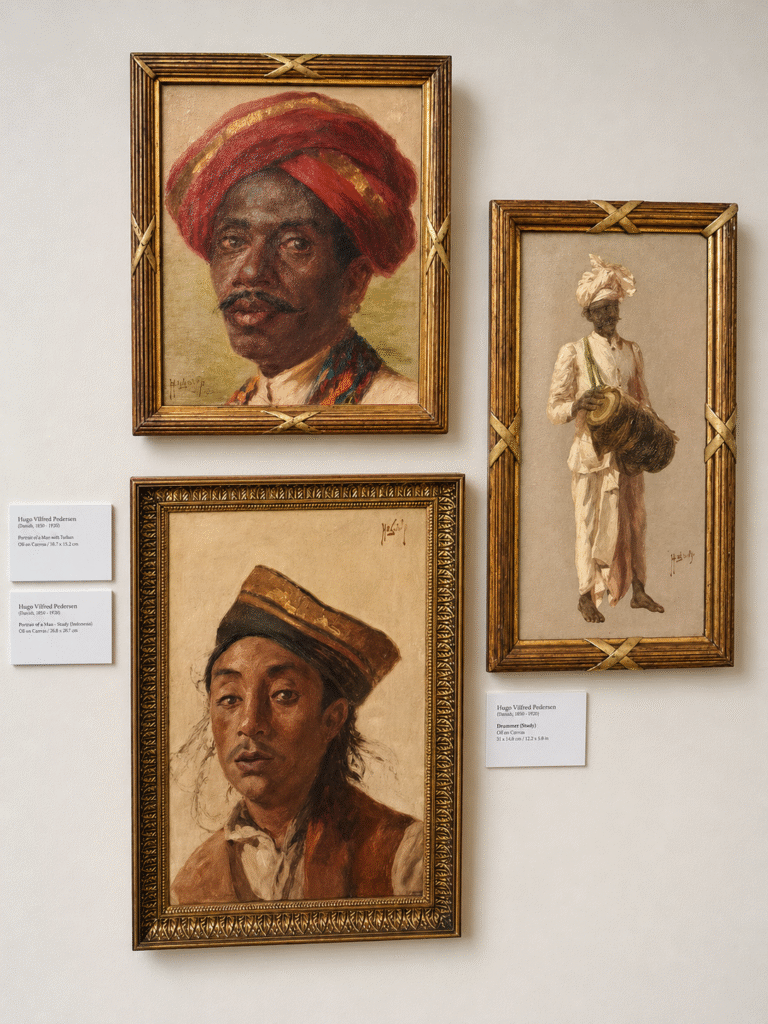
The portrait of the Rao of Baidla with his son around the time of the Sepoy Mutiny invokes a kind of questionable majesty, while the portraiture of more ordinary people by Hugo Velfred Person, like the drummer , a boy from Madras, and the Bhutla man from the lower Himalayas, is a study of the cultural diversity across the subcontinent. My two personal favourites are the portraits of the Sikh Man and the soldier of the North West Frontier. The silky quality of their ecru beard , their melancholic eyes, which, rather than confronting the viewers like Pederson’s humbler subject ,look away , the effect of natural light on their wrinkled skin , cast life into the subject.
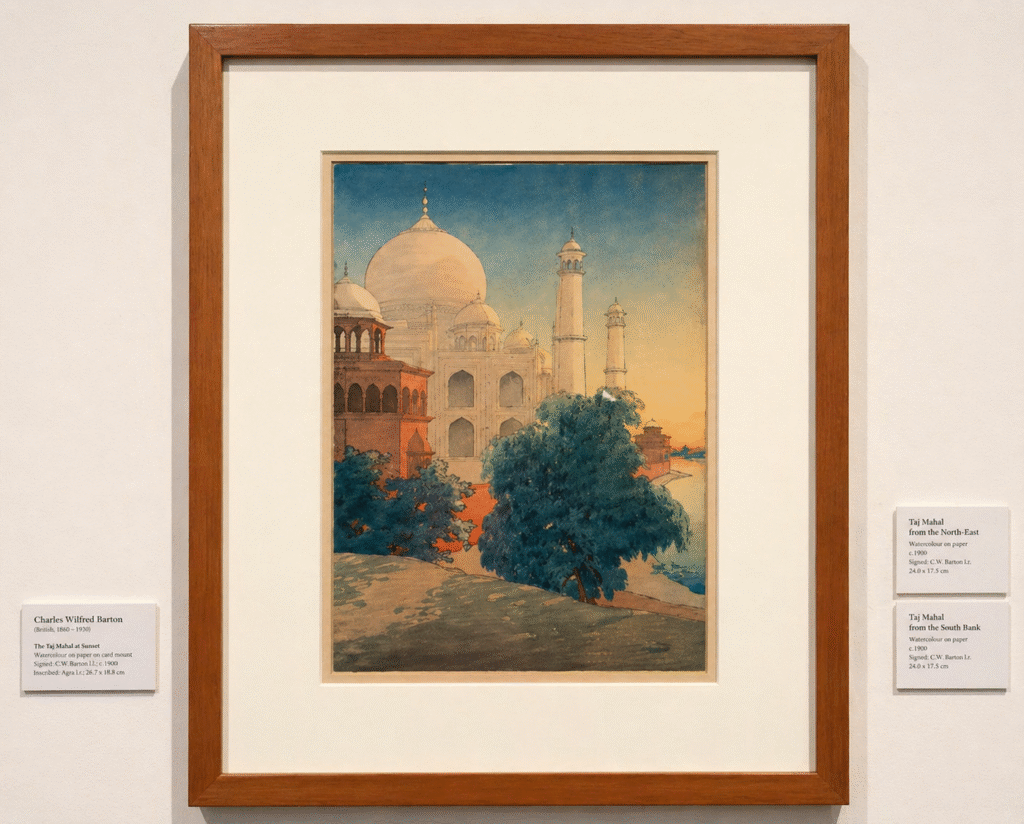
The last section of the exhibition comprises Japanese prints of Indian scenery made by Charles William Bartelett and Yoshida Hiroshi. The English artist Charles William Bartelett visited Southeast Asia in the early 1900s. Around 1913, he met the celebrated Japanese woodblock printmaker Shozaburo Wantanabe, who wanted to convert Charles’s watercolour paintings into Shin Hanga prints. One can see the Taj Mahal and Golden Temple washed under cool blue light in these prints. This exhibition is a must-visit for art enthusiasts, history buffs, and anyone curious about the colonial era.
Leave a Reply